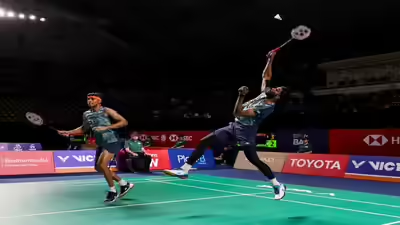




Channel 5 steps into Commonwealth Games coverage as BBC bows out after 7 decades / Image: File
For the first time since 1954, the BBC will not broadcast the Commonwealth Games, marking one of the biggest shifts in British sports television in decades.Instead, Channel 5 has secured the rights to air daily highlights from the Glasgow 2026 Commonwealth Games after a sublicensing agreement with TNT Sports.The decision officially ends the BBC’s uninterrupted 72-year relationship with the multi-sport event, a partnership that survived changing generations, broadcasting revolutions, and the rise of streaming platforms. The move is widely viewed as a symbolic moment in the changing landscape of UK sports media.TNT Sports had already won the live rights for Glasgow 2026 after reportedly outbidding the BBC last year. The broadcaster, owned by Warner Bros. Discovery, will now deliver more than 600 hours of live coverage across television and streaming platforms, including HBO Max.The Commonwealth Games will begin on July 23 in Glasgow, with organisers hoping the event can revive interest after years of uncertainty surrounding the competition’s future.
Why the BBC walked away?
Behind the decision lies a deeper financial crisis facing the BBC and a major shift in its sports strategy.The broadcaster recently announced plans to cut between 1,800 and 2,000 jobs as part of a £500 million efficiency programme aimed at tackling mounting financial pressures. Sports budgets are expected to take a substantial hit, forcing the corporation to rethink which events it can continue to afford.According to reports, BBC executives chose not to pursue the highlights package after discussions with TNT Sports. The broadcaster is now prioritising digital clips and younger online audiences over expensive traditional rights deals.BBC sport director Alex Kay-Jelski has reportedly focused heavily on digital-first content strategies, particularly football clips and streaming-friendly rights packages. Over the past year, the BBC has instead invested in Bundesliga football, Women’s Champions League coverage, home nations’ World Cup qualifiers, Six Nations rugby and Champions League highlights.The corporation’s changing priorities have already become visible elsewhere. The BBC recently stepped away from broadcasting the University Boat Race, which moved to Channel 4, while its upcoming FIFA World Cup 2026 coverage will reportedly be presented from Salford studios instead of on location in North America.Critics argue the loss of the Commonwealth Games raises questions about whether the BBC is slowly retreating from its traditional public service broadcasting role in sports.
Channel 5 expands sports portfolio
For Channel 5, the deal represents another major step into mainstream sports broadcasting.Over the past year, the network has aggressively expanded its sports portfolio, securing rights to England men’s T20 cricket internationals, Club World Cup coverage and weekly NFL games. The Commonwealth Games highlights package further strengthens its growing position in free-to-air sports television.Meanwhile, TNT Sports sees Glasgow 2026 as a major win after losing several key properties in recent years, including some international rugby and Champions League rights. The company now controls a powerful Olympic and multi-sport portfolio that includes the 2026 Winter Olympics in Milan and the 2028 Summer Olympics in Los Angeles.The Glasgow Games themselves have faced major uncertainty. Australia originally planned to host the event before pulling out due to rising costs, forcing Glasgow to step in as a replacement host. The scaled-down event is operating under tight financial conditions, despite continued funding support from the Australian state of Victoria.Still, Commonwealth Sport executives insist the event’s future is stabilising.Chief executive Katie Sadleir described the broadcast partnerships as a “landmark moment” for the Games. She also pointed to the recent decision to award the 2030 Commonwealth Games to India as evidence that the competition still has long-term momentum.
Glasgow 2026
The BBC losing the Commonwealth Games is about more than a single sporting event.It reflects the rapid transformation of how sports rights are bought, sold and consumed in Britain. Traditional public broadcasters are increasingly struggling to compete financially with global media giants and streaming-focused companies willing to spend heavily on premium sports properties.At the same time, broadcasters are chasing younger audiences through clips, streaming subscriptions and digital engagement rather than long-form television coverage.For millions of British viewers, however, the Commonwealth Games had long been associated with the BBC’s familiar presentation style, iconic theme music and free nationwide accessibility. Glasgow 2026 will now test whether audiences are willing to embrace a new broadcasting era.